ELECTRIC HEATING SYSTEMS
Pipeline and tank tracing for anti-wax, anti-freeze, and viscosity reduction -- engineered heat tracing systems from heat loss calculation to commissioned installation.
Keeping Pipelines Flowing and Equipment Operational in Cold and High-Wax Environments
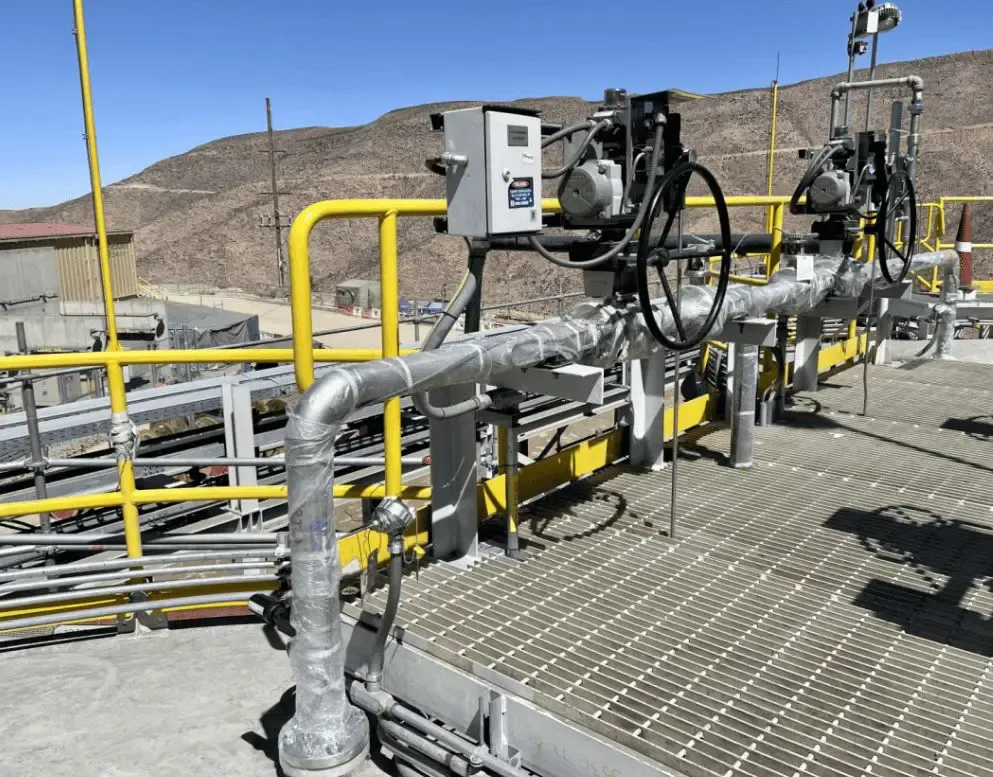
Electric heat tracing is not the same as active heating -- it is temperature maintenance. Where electromagnetic heaters and water bath heaters raise fluid temperature, electric heat tracing holds it there: preventing wax deposition in flowlines, preventing freeze-up in water lines, and maintaining viscosity without adding a combustion source to the system.

Anti-Wax Tracing for Crude Oil Flowlines
Crude oil wax deposition begins when the oil temperature falls below the wax appearance temperature (WAT). In long flowlines between the wellhead and the gathering station, the pipe wall temperature can drop below the WAT during low-flow periods -- even when the bulk oil temperature is still above the WAT. Electric heat tracing maintains the pipe wall temperature above the WAT continuously, preventing wax deposition from starting.

Anti-Freeze for Water, Chemical & Utility Lines
Produced water lines, chemical injection lines, and firewater mains are vulnerable to freeze-up at sub-zero ambient temperatures. A frozen line can disable demulsifier dosing, leading to process upsets. Self-regulating heat tracing cables, covered with appropriate insulation, prevent freezing at the lowest design ambient temperature with automatic power adjustment as temperature fluctuates.

Crude Oil Storage Tank Heating
Crude oil storage tanks with high pour-point product require heating to maintain pump suction reliability. Electric heat tracing on the tank floor and lower shell provides a low-intensity, uniform heat input that maintains the tank temperature without the risk of localized overheating that can occur with immersion heaters.

Wellhead and Christmas Tree Winterization
At the wellhead, Christmas tree valves, choke bodies, and instrument connections are exposed to ambient temperature and are particularly vulnerable to freeze-up. Electric heat tracing combined with appropriate insulation eliminates hydrate formation and ice plugging, allowing year-round operation without manual heat application.
Supplier Reference
Electric heating systems are part of LINSON OIL's integrated heating product range, supplied alongside water bath heaters, electromagnetic heaters, and heating skid packages to upstream oilfield operators. → View All Heating Products
System Design -- Cables, Controls & Insulation

The Heat Balance Principle
Electric heat tracing is a heat loss compensation system, not an active heating system. Every insulated pipeline loses heat to the ambient environment. The heat tracing cable must supply at least as much heat per metre as the pipeline loses per metre to the environment -- at the minimum design ambient temperature -- in order to maintain the pipeline at or above the minimum required temperature.
The starting point of any heat tracing design is therefore a heat loss calculation: determining the W/m of heat loss from the specific pipeline at design conditions.
Cable Types
-
Self-Regulating (Self-Limiting) Cables
The most widely used cable type. The electrical resistance of the polymer core increases as the core temperature rises -- automatically reducing power output as the pipe temperature approaches setpoint. Inherently safe, can be cut to any length on site.
-
Constant Wattage (Zone) Cables
Fixed power output per metre regardless of temperature. Used where a precise and consistent heat input is required, or where self-regulating cable output is insufficient at low ambient temperatures.
-
Mineral Insulated (MI) Cables
The highest-temperature capable cable. Consists of a resistance heating wire inside a metallic sheath packed with magnesium oxide insulation. Capable of surface temperatures up to 500°C.
Control and Monitoring
Level 1: Thermostat
Pipe-mounted mechanical switch. Lowest cost, suitable for non-critical applications like utility anti-freeze.
Level 3: HTMS
PLC/SCADA-integrated Heat Tracing Management System. Essential for large facilities with hundreds of circuits.
The Non-Negotiable Role of Insulation
Electric heat tracing without adequate insulation is engineering malpractice. If the insulation is inadequate or damaged, the heat loss increases beyond the cable's compensation capacity. LINSON OIL's system design always includes an insulation specification (type, thickness, cladding) as part of the deliverable.
Engineering Specifications
Standard operating parameters for industrial-grade heat tracing components.
| Parameter | Standard Range |
|---|---|
| Output (at 10°C) | 10 - 33 W/m |
| Maintain Temperature | Up to 65°C |
| Exposure Temperature | Up to 85°C (intermittent) |
| Voltage | 110-120V / 220-240V / 380V AC |
| Insulation & Jacket | Modified polyolefin / Fluoropolymer |
| Explosion-proof Rating | ExeIIC / ExnAIIC |
| Standards | IEEE 515 / IEC 62395 |
| Parameter | Specification |
|---|---|
| Output | 10 - 60 W/m (fixed) |
| Maintain Temp | Up to 120°C |
| Zone Length | Up to 100 m per zone |
| Explosion-proof | ExdIIC / ExeIIC |
| Design Input | What LINSON OIL Calculates |
|---|---|
| Pipe diameter, material, insulation | Heat loss per metre (W/m) |
| Fluid maintain temperature | Required cable output per metre |
| Pipeline length & configuration | Total cable length & multipliers |
| Power supply & circuit length | Breaker rating, ground fault protection |
Standard Supply & Customization Scope
LINSON OIL supplies electric heating systems as engineered packages, not just bulk components.
Standard System Supply
Engineering & Design
- Heat loss calculation per pipeline/tank section
- Cable type selection and rated output determination
- Circuit layout, breaker sizing, and ground fault protection
- Insulation specification and control philosophy
Material Supply
- Heating cable (cut to length or bulk reels)
- Explosion-proof junction boxes and connection kits
- Pipe-mounted thermostat or electronic controller
- Power distribution and control panel
Documentation
- Heat tracing design drawings (pipeline isometric)
- Circuit schedule and material take-off list
- Installation guide and commissioning checklist
OEM / ODM Customization
- HTMS Integration Centralized PLC/SCADA monitoring
- Mineral Insulated (MI) Cable High temp >65°C & steam replacement
- Zone 1 ExdIIC Components High-risk classified areas
- ATEX-Compliant System European market certification
- Tank Floor Tracing Design Integrated with civil construction
- Instrument Winterization Package Dedicated tracing & insulation kits
- Commissioning Services Resistance testing & energisation

Engineered Systems. Certified Components. Documented Design Basis.
When a heat tracing system underperforms, the cause is almost always a design error, not a cable issue. By owning the design, LINSON OIL takes responsibility for system performance.
Certifications
- ISO 9001:2015 / ISO 14001 / ISO 45001
- IEEE 515 Design Basis
- IEC 62395 Compliance
- IEC 60079 Series (Explosion-proof)
- ATEX Available
- Sinopec & CNPC HSE Certified
- CNAS Accredited Laboratory
Quality Assurance Process
Design Verification
Heat loss calculations reviewed internally. Cable output verified to provide positive heat balance with 10-15% design margin.
Component Traceability
Cables and components sourced from qualified suppliers with IEC/ATEX certifications. Batch certs maintained in project file.
Panel Factory Test
Control panels are function-tested before shipment: breaker operation, GFCI trip test, thermostat calibration, alarm function.
Documentation Package
Full design documentation issued: calculation report, circuit schedule, isometric drawings, and maintenance schedule.
Integrated Heating Portfolio
Integrated System Supply
In facilities where electromagnetic heaters or water bath heaters provide primary heating, electric heat tracing provides the complementary temperature maintenance function across interconnecting pipelines, instrument connections, and storage equipment.
Sinopec & CNPC Facilities
Electrical heating equipment supplied is subject to stringent HSE supplier qualification -- including Ex certification compliance, installation inspection, and performance verification. LINSON OIL has maintained this qualification across multiple supply cycles.
Warranty & Support
Standard: 2 Years Warranty
Industry Benchmark: 1 YearFrom commissioning or 26 months from shipment. Covers heating cable (manufacturing defects), junction boxes, connection kits, and control panel components. Long-term partners receive up to 2.5 years extended coverage.
After-Sales Support Scope
- Periodic Inspection: IEC 62395 compliant checklist provided for annual maintenance.
- Troubleshooting Support: Remote diagnosis for ground fault trips or underperformance.
- System Expansion: Re-calculation and component supply for pipeline extensions.
Tell Us the Pipeline, the Fluid, and the Coldest Night of the Year. We'll Design the System.
Electric heat tracing system design starts with three inputs: what you are tracing, what temperature you need to maintain, and what your minimum ambient temperature is. Send us these parameters and our engineers will return a preliminary system design within 1-2 business days.
Free Engineering Resource
Submit your tracing parameters via the form and receive:
- Preliminary heat loss calculation and cable output recommendation (W/m)
- Cable type selection rationale (Self-regulating vs. Constant Wattage vs. MI)
- Estimated cable quantity and power panel specification for budget planning