

Atmospheric & Elevated
Storage Tanks
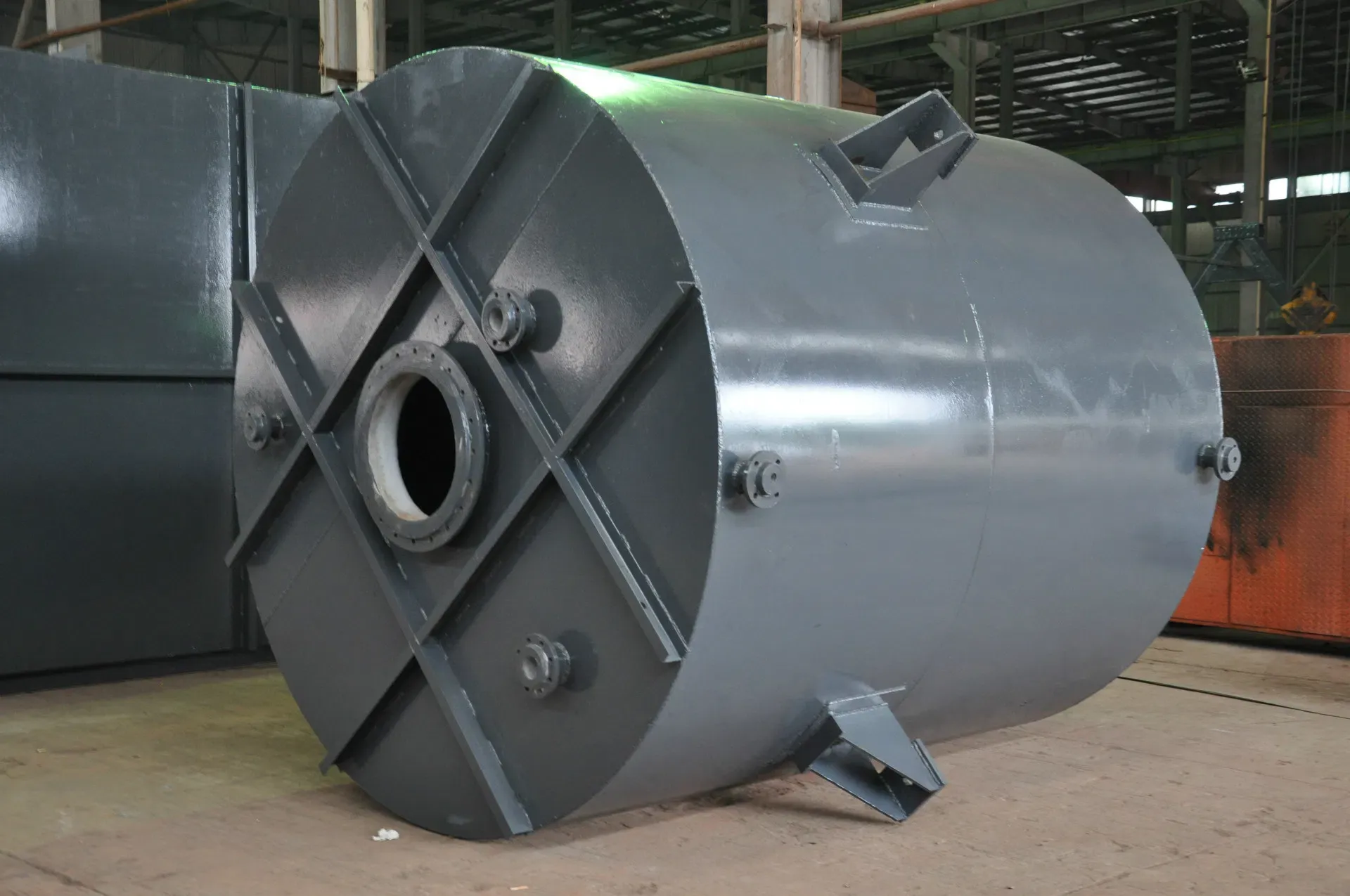
Crude oil and produced water storage -- from wellsite elevated collection tanks to large atmospheric field storage, with integrated heating, metering, and level monitoring.
Elevated (gravity discharge)
Custom sizes available
Chemical solutions
Level gauge · Metering
GB 150 (pressurized)
Storage Solutions From the Wellpad to the Field Terminal
Storage tanks in upstream oil and gas serve two distinct functions: collection and intermediate buffer storage at the wellsite or gathering station, and longer-term storage at field terminals and transfer points. The tank type, size, and feature set needed for each application differ significantly -- LINSON OIL supplies both, with the optional equipment packages that field operations actually require.

Wellsite Crude Oil Collection & Gravity Tanker Loading
At remote wellsites and small multi-well pads without pipeline infrastructure, produced crude oil is collected in an elevated storage tank and loaded into road tankers by gravity -- no pump required. The elevation (typically 2.5-4.5 m) provides sufficient static head to drive crude oil into the tanker. For high pour-point crude, an integrated electric heating system maintains the tank temperature above the pour point. An anti-theft valve on the outlet prevents unauthorized withdrawal.

Gathering Station & Field Terminal Buffer Storage
Between the production separator train and the crude oil export pipeline, a buffer storage tank provides operational flexibility: it absorbs variations in production rate, allows the export system to operate at a steady rate, and provides hold-up for crude oil that temporarily does not meet export specification. Flat-bottom atmospheric tanks in this service range from a few hundred cubic metres to tens of thousands of cubic metres.

Produced Water Storage & Transfer
Produced water separated from crude oil must be stored before disposal or reinjection. Produced water storage tanks are typically atmospheric flat-bottom vessels; their design must account for the higher density and corrosivity of produced water. Tank material selection, internal coating, and cathodic protection are influenced by the produced water chemistry. LINSON OIL designs these tanks to the specific water analysis provided.
Chemical & Utility Fluid Storage
Oilfield chemical injection systems require storage tanks sized to hold the appropriate inventory at the injection dosing rate. These tanks are typically small (1-50 m³) and are constructed from carbon steel with appropriate internal coating, or from stainless steel. LINSON OIL supplies chemical storage tanks as standalone vessels or as components of complete chemical injection skid packages.
Tank Design Principles -- Atmospheric Vessels Are Not Simple Vessels

Design Standards
- GB 50341: Vertical cylindrical tanks; mandatory for tanks above capacity threshold in China.
- API 650: Welded tanks for oil storage; utilized for export projects and international clients.
- GB 150: Applies to any pressurized components on the tank operating above atmospheric threshold.
Why Atmospheric Tank Design Requires Engineering Attention
Atmospheric tanks are sometimes treated as commodity items -- plates welded into a cylinder with a roof and a floor. This underestimates the engineering required for reliable field performance. The failure modes of atmospheric tanks -- roof collapse under vacuum (inadequate breather valve), shell buckling under wind load, floor settlement and leakage, fire event roof lift -- are all preventable by correct design but can be catastrophic if the design is inadequate.
Shell Design -- Wind, Seismic, and Vacuum Loads
In addition to the hydrostatic pressure from the liquid contents, atmospheric tank shells must be designed for external loads:
- Wind load: the shell must resist lateral wind pressure without buckling; stiffener rings or wind girders are added as required by the design calculation.
- Seismic load: in seismic zones, the tank must be designed for lateral seismic force and the resulting shell/anchor bolt loads.
- Vacuum / negative pressure: if the breather valve fails closed, negative pressure builds inside and can collapse the roof or buckle the shell; the design must include vacuum resistance or a sized vacuum breaker valve.
Floor Design and Foundation
Flat-bottom tank floors are designed with a slight slope toward a low-point drain sump. The floor is supported on a prepared foundation -- either a concrete ringwall or a sand/gravel pad. Foundation settlement is a primary cause of floor cracking and bottom-of-shell corrosion; LINSON OIL specifies foundation preparation requirements and recommends post-construction settlement monitoring.
Roof Design
- Fixed cone roof: standard for most field storage tanks; simplest and most common.
- Fixed dome roof: self-supporting dome for larger diameters.
- Open-top (floating roof): for large crude oil storage where vapor emission control is required.
Elevated Tank Structural Design
Supported on a structural steel frame that must carry the full weight of the tank plus liquid contents plus wind/seismic load. Structural design includes leg sizing, bracing pattern, base plate, and thermal expansion accommodation for heated tanks.
Breather Valve Sizing (Safety Critical)
The breather valve (pressure-vacuum relief valve) must be sized to relieve the maximum inflow rate of vapor and admit the maximum inflow rate of air without exceeding the tank design pressure/vacuum. Undersized valves are a common cause of roof damage. LINSON OIL sizes breather valves per API 2000.
Engineering Specifications
Detailed parameters for both elevated wellsite tanks and atmospheric flat-bottom field storage tanks.

Elevated Tank Specifications
| Parameter | Standard | Custom Range |
|---|---|---|
| Nominal Volume | 40 m³ | 5 - 200 m³ |
| Tank Diameter | Per volume and H/D ratio | Custom per site constraints |
| Elevation (to tank base) | 2.5 - 3.5 m (standard) | Up to 5.0 m |
| Shell Material | Q235B / Q345R | 316L SS for corrosive produced water |
| Design Pressure | Atmospheric (< 10 kPa g) | Low-pressure (< 0.1 MPa) on request |
| Design Temperature | -20°C to +80°C (standard) | Extended range with material selection |
| Heating | Electric immersion / tracing (optional) | Water bath heating coil (optional) |
| Breather Valve | Pressure-vacuum relief, sized API 2000 | Flame arrester available |
| Structural Support | 4-leg or 6-leg structural steel frame | Concrete or steel foundation design provided |
Atmospheric Flat-Bottom Tank Specifications
| Parameter | Standard Range | Notes |
|---|---|---|
| Nominal Volume | 50 - 10,000 m³ | Larger tanks by field erection |
| Tank Diameter | 3 m - 25 m+ | H/D ratio per API 650 / GB 50341 |
| Shell Height | 3 m - 12 m | Per volume and site height limits |
| Floor Type | Flat with sump / Conical / Annular | Per capacity and foundation |
| Roof Type | Fixed cone / Fixed dome / Floating | Per vapor pressure and emission requirements |
| Foundation | Concrete ringwall / Sand-gravel pad | Per geotechnical and tank size |
| Cathodic Protection | Sacrificial anode / Impressed current | For produced water and soil corrosion |
| Internal Coating | Epoxy / Phenolic epoxy / Glass-flake | Per fluid service |
Standard Supply & Optional Features
Standard Supply -- Atmospheric Flat-Bottom
- ✓ Shell courses (rolled plate), annular floor plates, roof plates
- ✓ Nozzles per client nozzle schedule
- ✓ Shell manhole(s) and roof manhole
- ✓ Breather valve (sized per API 2000)
- ✓ Level gauge nozzle connections
- ✓ Foundation anchor bolt holes in shell base ring
- ✓ Shop assembly and fit-up; field erection for larger tanks
Optional Features and Packages
Designed to Standard. Built to Last. Documented at Every Step.
Rigorous QA/QC from material receipt to final hydrostatic testing ensures long-term operational integrity.
Key Certifications
- GB 50341 / API 650 Design Compliance
- GB 150 (Pressurized Components)
- ISO 9001:2015 Quality Management
- Sinopec & CNPC HSE Certified Supplier
- CNAS Accredited Laboratory
- SGS / BV / DNV Third-Party Ready
Design Review
Shell thickness, wind girder, roof design, nozzle reinforcement, and breather valve sizing reviewed against applicable standard.
Material & Welding
Full material traceability. WPS and PQR maintained. All NDT (RT/MT/PT/UT) performed by CNAS-qualified personnel.
Hydrostatic Fill Test

Tank filled with water to design level. Inspected for leaks and settlement. Test records issued.
Integration & Export Prep
Functional tests on heating and instrumentation. Internal surface preservation and export packaging or bolted-flat-pack prep.
Storage Tank Supply -- Proven in the Field

Multi-Function Wellsite Storage Collectors
Integrates an elevated tank with oil-gas separation, self-heating, metering, and gravity tanker loading in a single factory-assembled unit.
View Product →
Sinopec & CNPC Certified Supply
Sustained qualification reflecting a delivery record that includes tank supply across wellsite, gathering station, and field terminal applications.
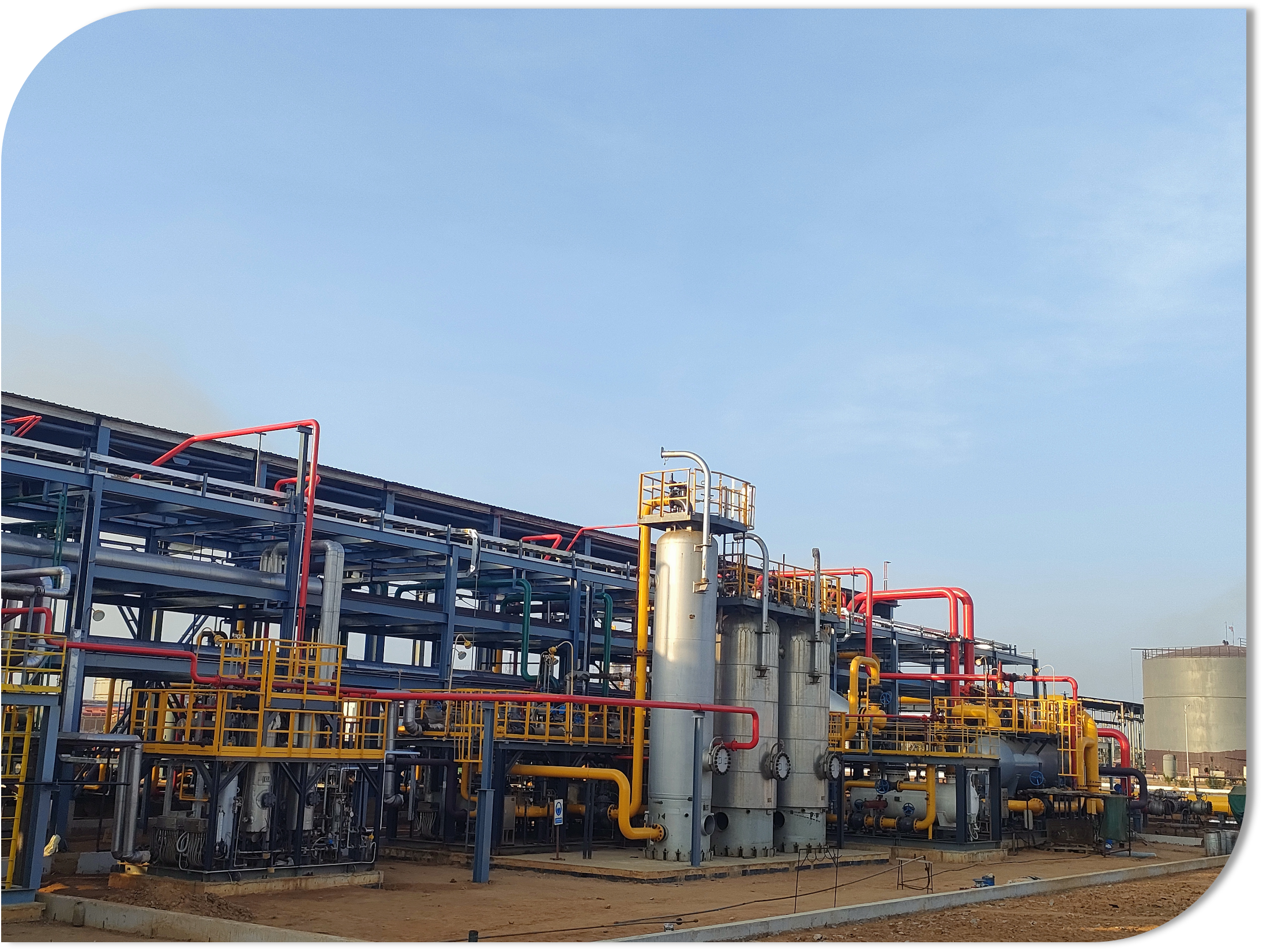
Congo (Brazzaville) & Beyond
Supplied storage and containment equipment as part of international packages, demonstrating experience with export logistics and API 650 compliance.
View Project Details →Leading Warranty Terms
Long-term partners enjoy up to 2.5 years warranty with priority support.
Lifecycle Support
- In-service inspection interval guidance per GB 50341 / API 653.
- Internal coating maintenance schedules and recoating specs.
- Cathodic protection monitoring guidance.
- Heating element replacement specs included in quality dossier.
- Capacity expansion structural and foundation reviews.
Volume, Fluid, Location.
Storage tank procurement is straightforward when the design inputs are clear. Send us your parameters and our team will confirm the applicable design standard, recommend the appropriate tank configuration and optional features, and provide a preliminary specification -- typically within 1-2 business days.
Free Engineering Resource
Submit your requirement and receive:
- ✓ Tank configuration recommendation
- ✓ Optional features selection based on fluid/climate
- ✓ Breather valve sizing estimate per API 2000
